What Does TYSM Stand For? Meaning, Uses & Examples

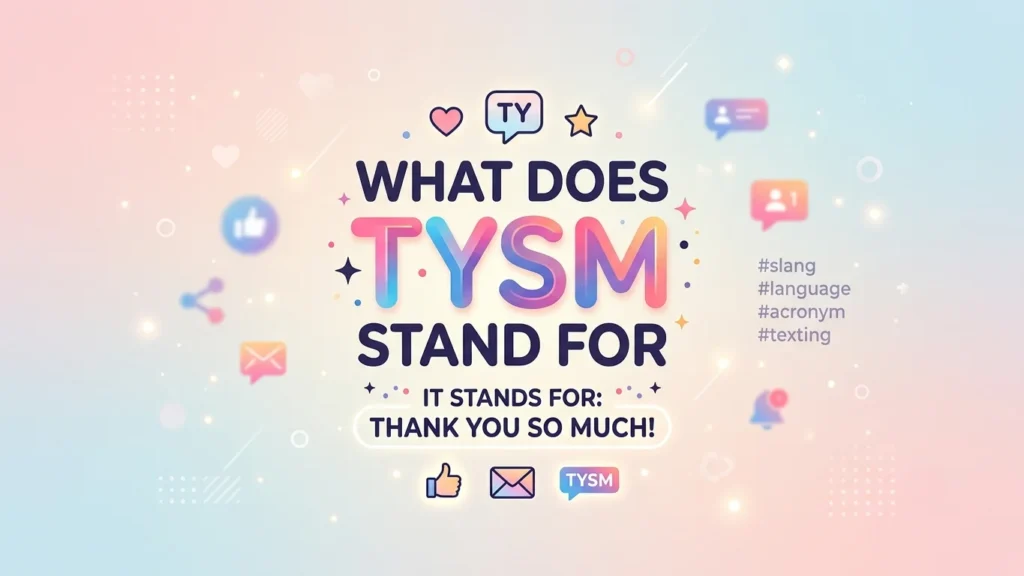
If you’ve ever received a message saying “TYSM!” after helping someone, you may have wondered, what does TYSM stand for? While it looks simple, this popular internet abbreviation carries more warmth than many people realize.
People search for its meaning because they see it everywhere—on TikTok, Instagram, Snapchat, WhatsApp, Roblox, gaming chats, and text messages. Some wonder whether it’s just another slang term, while others want to know if it’s appropriate in different situations.
The good news is that TYSM is easy to understand. Once you know its meaning and the emotions behind it, you’ll recognize why millions of people use it every day to express quick, genuine appreciation.
What Does TYSM Stand For? – Quick Meaning
TYSM stands for “Thank You So Much.”
It’s a short way of expressing sincere gratitude without typing the full phrase. Although it’s abbreviated, it often feels warm, friendly, and heartfelt.
Quick facts:
- Full form: Thank You So Much
- Tone: Friendly, appreciative, positive
- Commonly used in texting and social media
- Suitable for friends, family, classmates, and online communities
- Usually informal rather than professional
Examples:
“TYSM for helping me finish my project!”
“Aww, TYSM! That really made my day.”
“TYSM for the birthday wishes!”
Origin & Background
TYSM became popular during the early years of instant messaging when people wanted faster ways to communicate. Platforms like MSN Messenger, AOL Instant Messenger, and early texting encouraged users to shorten common phrases because typing on mobile phones took more time.
As smartphones and social media evolved, abbreviations became part of internet culture. TYSM naturally spread across platforms including Twitter, Instagram, Snapchat, Discord, TikTok, and gaming communities.
Unlike some slang terms that change meaning over time, TYSM has remained remarkably consistent. It has always represented gratitude, making it one of the safest and most universally understood internet abbreviations.
Today, people of all ages use TYSM because it feels quick, sincere, and emotionally positive.
Real-Life Conversations
1st Person:
“Hey, thanks for sending me the lecture notes.”
2nd Person:
“You’re welcome!”
1st Person:
“TYSM! You seriously saved me.”
Instagram DMs
1st Person:
“I absolutely love your artwork.”
2nd Person:
“TYSM! That means a lot to me.”
TikTok Comments
1st Person:
“This tutorial actually worked!”
2nd Person:
“TYSM for watching! Glad it helped.”
Text Messages
1st Person:
“Your gift arrived today.”
2nd Person:
“I hoped you’d like it.”
1st Person:
“TYSM! It’s perfect.”
Emotional & Psychological Meaning
Although TYSM is only four letters, it often carries genuine emotion.
People use it because gratitude strengthens relationships. Even a brief expression of appreciation makes conversations feel warmer and more personal.
In today’s fast-moving digital world, people often don’t have time to write long messages. TYSM allows someone to express heartfelt thanks without slowing the conversation.
I once watched a friend spend weeks preparing for a difficult exam. After sharing study notes with classmates, nearly everyone replied with a simple “TYSM.” Even though the replies were short, they clearly communicated appreciation. Sometimes, small words carry surprisingly big emotions.
Psychologically, TYSM reflects kindness, acknowledgment, and emotional reciprocity. It tells the other person, “I noticed your effort, and I’m grateful.”
Usage in Different Contexts
Social Media
TYSM appears frequently in comments, captions, livestream chats, and direct messages.
Creators often reply:
“TYSM for all your support!”
Followers might comment:
“TYSM for this helpful video.”
Friends & Relationships
Among friends, TYSM sounds warm and natural.
Examples include:
- TYSM for always listening.
- TYSM for picking me up.
- TYSM for remembering my birthday.
Partners also use it to express affection after thoughtful gestures.
Work & Professional Settings
TYSM can work in relaxed workplace chats or team messaging apps.
Example:
“TYSM for sending the report so quickly.”
However, in formal emails, writing “Thank you very much” usually creates a more polished impression.
Casual vs Serious Tone
Casually, TYSM feels cheerful and energetic.
In serious conversations, especially those involving sympathy or major life events, writing the complete phrase “Thank you so much” often feels more respectful and heartfelt.
When NOT to Use It
Although TYSM is positive, there are situations where spelling out the full phrase is a better choice.
Avoid using TYSM:
- In formal business emails
- During job interviews
- Academic papers
- Legal communication
- Condolence messages
- Serious professional correspondence
- Messages where formality matters
Some older recipients may not recognize internet abbreviations, which can create confusion.
Common Misunderstandings
One common misconception is that TYSM sounds lazy.
In reality, most people interpret it as friendly and sincere.
Another misunderstanding is assuming it’s sarcastic. Like any text message, tone depends on context. Adding emojis or punctuation can make your intention clearer.
Some people also believe TYSM is only for teenagers. In fact, adults, professionals, parents, gamers, creators, and online communities use it regularly.
The abbreviation isn’t childish—it’s simply efficient.
Comparison Table
| Expression | Meaning | Tone | Best Used For |
|---|---|---|---|
| TYSM | Thank You So Much | Warm | Everyday gratitude |
| TY | Thank You | Neutral | Quick thanks |
| Thanks | Appreciation | Casual | Daily conversations |
| Thank You | Appreciation | Polite | Formal and informal |
| Much appreciated | Deep gratitude | Professional | Workplace communication |
| NVM | Never Mind | Opposite direction | Ending a request |
| IDC | I Don’t Care | Opposite emotion | Showing indifference |
| Appreciate it | Thankfulness | Friendly | Personal and work settings |
Key Insight
TYSM balances speed with genuine appreciation. It feels more emotional than simply saying “TY” while remaining shorter than writing the complete phrase.
Variations / Types
TY
Simple abbreviation for “Thank You.”
TYVM
Thank You Very Much, slightly more formal.
THX
A casual alternative used in quick chats.
Thanks
The standard everyday expression.
Thanks a Lot
Shows stronger appreciation.
Many Thanks
Often used in emails and polite conversations.
Appreciate It
Expresses sincere gratitude.
Big Thanks
Adds enthusiasm and friendliness.
Thanks So Much
The full written version of TYSM.
Endless Thanks
Used when someone feels especially grateful.
How to Respond When Someone Uses TYSM
Casual Replies
- You’re welcome!
- Anytime!
- No problem!
- Happy to help!
Funny Replies
- My payment is one cookie.
- You’re officially in my fan club.
- I’ll accept unlimited snacks as thanks.
- Mission accomplished!
Mature Replies
- I’m glad I could help.
- It was my pleasure.
- Anytime you need assistance, let me know.
- Happy everything worked out.
Respectful Replies
- You’re very welcome.
- I’m pleased it helped.
- Wishing you all the best.
- It was truly my pleasure.
Regional & Cultural Usage
Western Culture
TYSM is extremely common across texting, social media, and online communities. It usually feels natural and friendly.
Asian Culture
Many English-speaking young people in Asian countries use TYSM in digital conversations, especially among students and gamers.
Middle Eastern Culture
English-speaking users frequently include TYSM alongside local expressions of gratitude, particularly on social media and messaging apps.
Global Internet Usage
Because English dominates many online platforms, TYSM has become internationally recognizable, even among non-native English speakers.
Gen Z vs Millennials
Gen Z uses TYSM naturally alongside emojis, memes, and internet slang.
Millennials also use it regularly but may alternate between TYSM and writing the full phrase depending on the conversation.
Is It Safe for Kids?
Yes. TYSM is considered one of the safest internet abbreviations because it simply means “Thank You So Much.” It encourages polite communication and gratitude. Parents should still teach children to understand context and recognize other online abbreviations separately.
FAQs
What does TYSM mean in slang?
TYSM means “Thank You So Much.” It’s a friendly internet abbreviation expressing appreciation across texting, gaming, and social media conversations every day.
What does TYSM mean for a girl?
For a girl, TYSM carries the same meaning: genuine gratitude. Context and relationship determine emotional warmth, not gender or age.
What does TYSM mean in Roblox?
In Roblox, TYSM means “Thank You So Much,” usually thanking teammates, friends, or players for gifts, trades, or assistance during gameplay.
What does TYSM mean in Gen Z?
Gen Z uses TYSM as a quick, positive way to express sincere thanks while keeping conversations fast, casual, and emotionally engaging online.
What is SM in Gen Z slang?
SM commonly means “so much,” though context matters because it can have other meanings depending on the platform and conversation.
What is TTYL in Gen Z slang?
TTYL stands for “Talk To You Later.” It’s a friendly way to end conversations while expecting to continue chatting another time.
Conclusion
Now that you know what does TYSM stand for, you’ll notice it almost everywhere online. Whether you’re chatting with friends, replying to social media comments, thanking someone after a game, or sending a quick text, TYSM is a simple way to express genuine appreciation.
Like many internet abbreviations, its real value isn’t just saving time. It’s about making people feel acknowledged. A small message of gratitude can brighten someone’s day, strengthen relationships, and create more positive conversations.
Use TYSM confidently in casual digital communication, and when the moment calls for extra warmth or professionalism, don’t hesitate to write out “Thank you so much” in full.