What Do PMO Mean in Text? Complete Meaning & Slang Guide

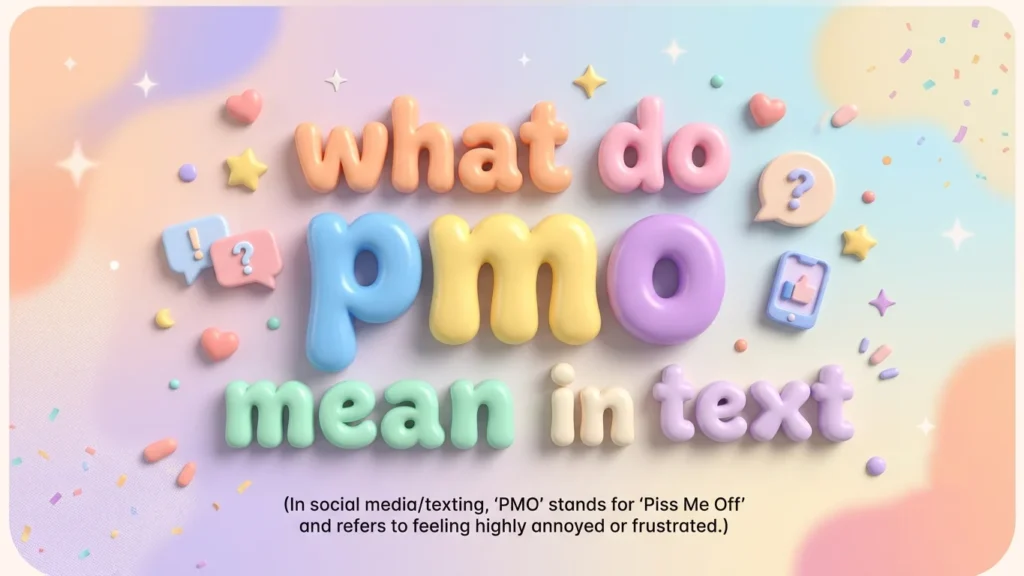
If you’ve recently received a message saying “PMO” and found yourself wondering, what do PMO mean in text, you’re definitely not alone. Text slang changes quickly, and the same abbreviation can carry different meanings depending on who sends it and where the conversation takes place.
In most everyday texting and social media conversations, PMO usually means “Put Me On.” It’s a friendly way to ask someone for a recommendation, introduce them to something interesting, or connect them with a person, song, trend, or opportunity.
However, PMO can also have other meanings in certain online communities, making it easy to misunderstand. This guide explains the most common definition, explores where it came from, shows realistic conversations, and helps you use it naturally and confidently.
What Do PMO Mean in Text? – Quick Meaning
The most common meaning of PMO in texting is:
- Put Me On
- Asking someone to recommend something.
- Asking to be introduced to someone or something.
- Requesting access, advice, or information.
Examples
“That playlist is amazing. PMO to more songs like these.”
“You always find the best restaurants. PMO!”
“PMO if you know any good remote jobs.”
In each example, the sender is simply asking someone to share knowledge or introduce them to something valuable.
Origin & Background
The phrase “Put Me On” has existed in spoken English for decades, especially in African American Vernacular English (AAVE), where it commonly meant introducing someone to new music, opportunities, people, or useful information.
As social media platforms like Instagram, TikTok, Snapchat, and X became more popular, users shortened the phrase to PMO to save time while typing.
Today, PMO appears in:
- TikTok comments
- Instagram captions
- WhatsApp chats
- Gaming communities
- Music discussions
- Fashion conversations
Its popularity grew because people constantly discover new trends online and want recommendations from trusted friends rather than random algorithms.
Over time, PMO evolved beyond music and now applies to almost anything worth sharing—from skincare products to career advice.
Real-Life Conversations
1st Person:
“I’ve been looking for a good gym.”
2nd Person:
“PMO if you find one with affordable membership.”
Instagram DMs
1st Person:
“Your outfits are always stylish.”
2nd Person:
“Thank you! I can PMO to a few brands I love.”
TikTok Comments
1st Person:
“This recipe looks incredible.”
2nd Person:
“PMO to more creators like this!”
Text Messages
1st Person:
“I finally started learning graphic design.”
2nd Person:
“Nice! PMO to the courses you’re using.”
These conversations feel natural because PMO keeps requests short while sounding friendly rather than demanding.
Emotional & Psychological Meaning
Although PMO looks like just another abbreviation, it carries an emotional message.
When someone says “PMO,” they’re often expressing:
- Curiosity
- Trust
- Excitement
- Openness to learning
- Respect for another person’s opinion
Rather than searching endlessly online, people often prefer recommendations from someone whose taste they already admire.
I remember asking a friend, “PMO to some productivity apps.” The apps themselves were helpful, but what mattered more was trusting someone who had already tested them. That’s one reason this phrase feels personal—it reflects confidence in another person’s experience.
In today’s digital world, recommendations often feel more meaningful than advertisements.
Usage in Different Contexts
Social Media
PMO is incredibly common on TikTok, Instagram, and X.
Examples include:
- PMO to good movies.
- PMO to your playlist.
- PMO to affordable fashion brands.
Friends & Relationships
Friends often use PMO when asking for:
- Music
- Restaurants
- TV shows
- Games
- Travel destinations
- Dating advice
The phrase sounds casual and friendly.
Work & Professional Settings
PMO can occasionally appear between coworkers in informal chats.
Example:
“PMO to any useful productivity tools.”
However, it should generally be avoided in formal emails or business communication.
Casual vs Serious Tone
Casual:
“PMO to your favorite coffee shop.”
Serious:
“Could you recommend a reliable accountant?”
Although both request recommendations, the second sounds more appropriate for professional situations.
When NOT to Use It
Avoid using PMO when:
- Writing formal business emails.
- Communicating with clients.
- Speaking to people unfamiliar with internet slang.
- Completing academic assignments.
- Writing official documents.
Also remember that PMO has different meanings in certain online communities. If context seems unclear, ask for clarification instead of assuming.
Common Misunderstandings
One common misunderstanding is believing PMO always has a single meaning.
In reality, context matters.
Some people immediately think PMO means Put Me On, while others may recognize different meanings from niche internet communities.
Another misunderstanding involves tone.
Some readers mistakenly interpret PMO as demanding.
Usually, it isn’t.
It’s closer to saying:
“Can you recommend something?”
instead of
“You have to help me.”
Understanding the conversation makes all the difference.
Comparison Table
| Expression | Meaning | Tone | Typical Use |
|---|---|---|---|
| PMO | Put Me On | Friendly | Asking for recommendations |
| LMK | Let Me Know | Casual | Requesting information later |
| PMOY | Put Me On You | Informal | Asking for an introduction |
| Hook Me Up | Recommend or provide | Casual | Friends |
| Suggest | Give advice | Neutral | Everyday conversation |
| FYI | For Your Information | Informative | Sharing facts |
| IDC | I Don’t Care | Opposite attitude | Showing disinterest |
| Recommend Me | Direct request | Neutral | Formal or casual |
Key Insight
PMO feels warmer than simply saying “recommend something.” It suggests that you value another person’s opinion and trust their judgment, which strengthens social connections.
Variations & Types
1. PMO to Music
Requesting song recommendations.
2. PMO to Movies
Asking someone for film suggestions.
3. PMO to Shows
Looking for television series to watch.
4. PMO to Books
Seeking interesting reading recommendations.
5. PMO to Fashion
Asking where someone buys stylish clothing.
6. PMO to Jobs
Looking for career opportunities or referrals.
7. PMO to Apps
Requesting useful mobile or desktop applications.
8. PMO to Restaurants
Seeking great places to eat.
9. PMO to Creators
Looking for entertaining influencers or content creators.
10. PMO to Opportunities
Requesting introductions to internships, networking events, or communities.
How to Respond When Someone Uses It
Casual Replies
- “Sure, I’ll send you my favorites.”
- “Absolutely! Check these out.”
- “I’ve got a great list for you.”
Funny Replies
- “Careful—you might become obsessed.”
- “Your wallet may never recover.”
- “Prepare for your new addiction.”
Mature Replies
- “I’d recommend starting with these options.”
- “Here are the ones I’ve personally enjoyed.”
Respectful Replies
- “Happy to help. Let me share a few recommendations.”
- “I’d be glad to introduce you to them.”
Regional & Cultural Usage
Western Culture
PMO is widely recognized among younger internet users, especially in music, fashion, and entertainment discussions.
Asian Culture
English-speaking social media users understand PMO, but many still prefer writing the full phrase for clarity.
Middle Eastern Culture
PMO appears among bilingual internet users, although local messaging habits often favor complete English expressions instead of abbreviations.
Global Internet Usage
Because TikTok and Instagram connect users worldwide, PMO continues spreading across cultures regardless of native language.
Gen Z vs Millennials
Gen Z uses PMO naturally in daily conversations and comments.
Millennials are generally familiar with it but may choose phrases like “recommend something” more often.
Is It Safe for Kids?
Generally, PMO meaning “Put Me On” is harmless. It’s simply a request for recommendations or introductions. However, because abbreviations can have multiple meanings online, parents and young users should always consider the conversation’s context before interpreting it.
FAQs
What does PMO mean in texting Gen Z?
Among Gen Z, PMO usually means “Put Me On,” asking someone for recommendations, introductions, useful advice, or interesting discoveries they enjoy sharing.
Is PMO appropriate in a text?
Yes. When meaning “Put Me On,” PMO is casual, friendly, and appropriate between friends in everyday texting and social media conversations.
What is PMO in English slang?
In English slang, PMO most commonly stands for “Put Me On,” requesting recommendations, introductions, helpful resources, or valuable opportunities from someone trusted.
What is PMO for guys?
For guys, PMO carries the same meaning: asking friends for recommendations, introductions, opportunities, music, fashion, games, or useful advice without changing intent.
What is PMO slang for a girl?
For girls, PMO usually means exactly the same thing: requesting recommendations, introductions, beauty products, entertainment, fashion ideas, or trusted suggestions from friends.
Is PMO a bad word in slang?
No. “Put Me On” is not offensive. However, remember PMO may represent different meanings online, making conversation context important before interpreting it.
Conclusion
If you’ve been asking what do PMO mean in text, the answer is usually simple: “Put Me On.” It’s a modern, friendly way of asking someone to recommend something, introduce you to an opportunity, or share something they genuinely enjoy.
Like many internet abbreviations, context always matters. While PMO most commonly carries a positive and helpful meaning, it’s wise to consider the conversation before assuming its intent.
Once you understand how it’s used, you’ll recognize PMO across text messages, TikTok comments, Instagram DMs, and group chats—and you’ll know exactly how to respond with confidence.